A century separates them. The first arrived in 1869 wearing Royal Navy uniforms and carrying field notebooks. The second arrived in 1975 with a backpack, a passport, and the haunting image of a piece of leather tucked away in a family album. Both were English. Both were skilled writers. And both looked upon the same Patagonia with eyes so different that their books seem to describe different lands.
Why are they featured on a motorcycle blog? Because their stories inspire adventures. They inspire journeys and quests. And because the routes they traveled, the hardships they faced, and the weather that battered them are still there, intact, every time we ride through Patagonia.
Musters: The One Who Went to Live There
George Chaworth Musters was 28 years old when he took a leave of absence from the Royal Navy and decided to cross Patagonia from one end to the other. On horseback, he was accompanied by a Tehuelche tribe that accepted him as a companion on their annual hunt.
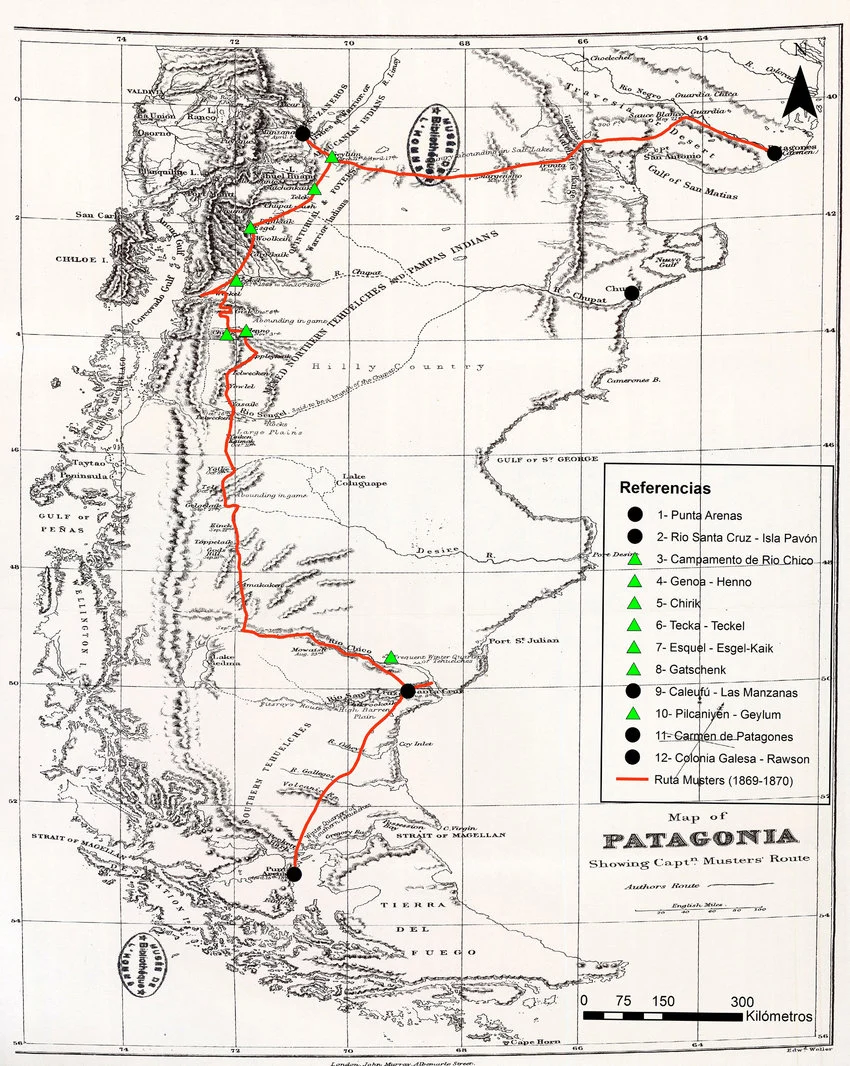
He spent the winter of 1869 in Puerto Santa Cruz, waiting for Chief Orkeke to give the order to depart. Three months at a small outpost on the Atlantic coast, learning to ride like a Tehuelche and to hunt with boleadoras. In the spring, they took down the tents and began their march.
What followed was an entire year on horseback: more than 2,200 kilometers from the Strait of Magellan to the Río Negro. They crossed the Río Chico, climbed the inland plateaus, and traversed the desert of rocks and short grasses. As Musters wrote:
"The view from the summit was extremely dreary: a vast plain stretching all the way to the horizon, without a single tree or bush to break the monotony."
From the Río Chico, he traveled northward: through the Deseado mountain ranges, the area the Tehuelche called Hennokaik, the “Land of Apples”—the Andean valleys where apple trees grew wild—until he reached Carmen de Patagones, the northern border of Patagonia on the maps of that time.
Following the publication of *At Home with the Patagonians* in 1871, the Royal Geographical Society presented him with a gold watch. They called him “the King of Patagonia.”
The report that opened the market
Musters didn't plan it that way. But information travels, and capital follows it. Natural fibers—wool, cotton—were the main raw materials for European industrial looms.
His book came out just as British capital was looking for places to expand in the southernmost part of the continent. In 1877, Henry Reynard imported 300 sheep to Patagonia. That was the beginning. In the following decades, the region became one of the world’s largest livestock-raising areas: 22 million sheep at its peak. Anglo-Chilean firms controlled the largest ranches. Scots made up more than 60 percent of the farmhands. It was, in effect, a Patagonia that spoke British languages.
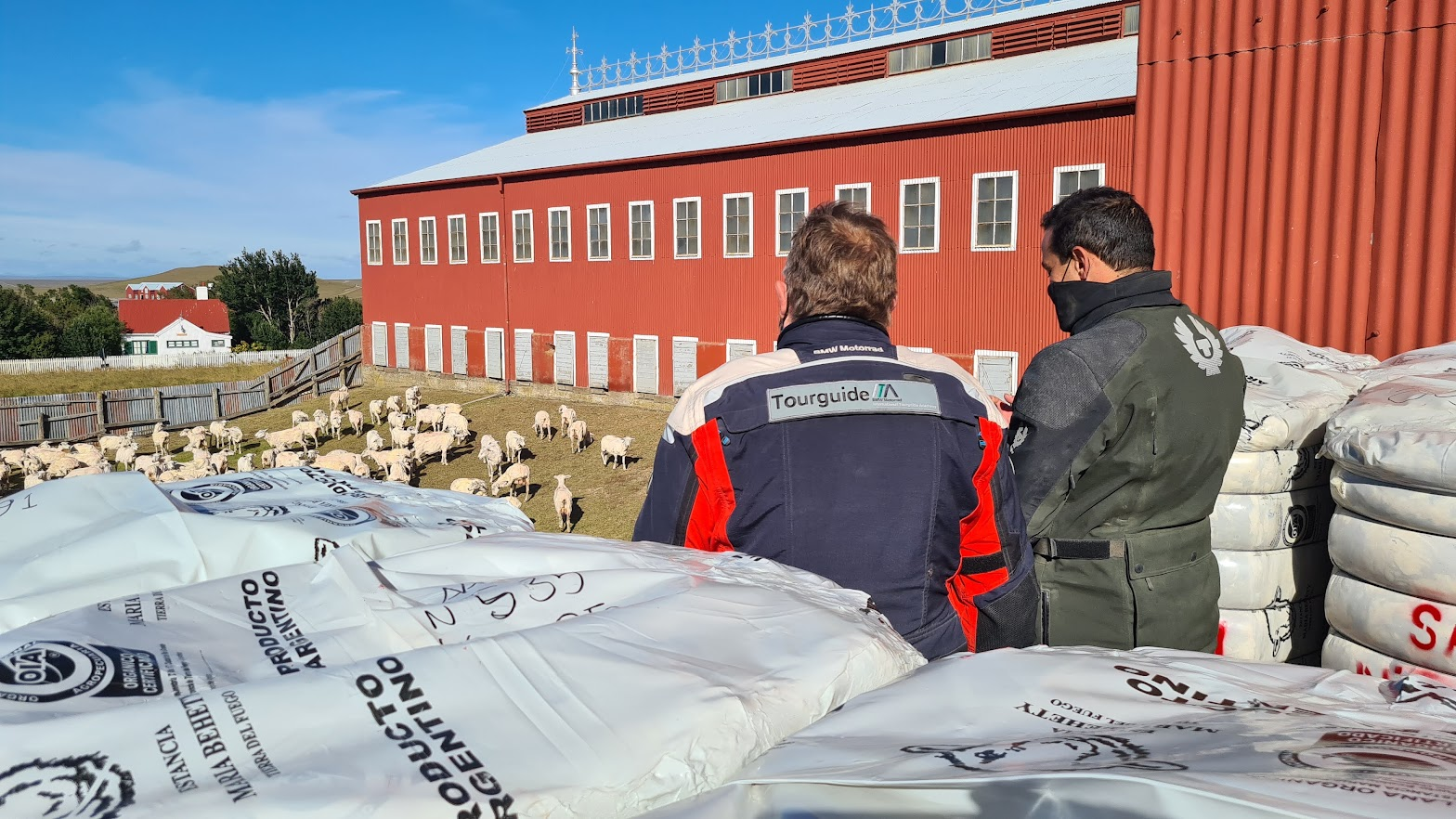
The British companies—many of which were listed on the London Stock Exchange—and the Menéndez Behety family stood out for the vast territory under their control, the brutal efficiency of their methods, and the vertical integration of their business. When Chatwin passed through Punta Arenas a century later, he came across the bust of José Menéndez in the Plaza de Armas: “bald as a bomb, ” he wrote.
If you read Musters with an eye toward “where to set up a sheep farm,” his journey is dotted with English-style estates that still hold prestige today. Some are connected by rail; others have their own ports for shipping wool.
Musters died in 1879, at the age of 38. He never lived to see what was to come.
Chatwin: The One Who Set Out to Imagine
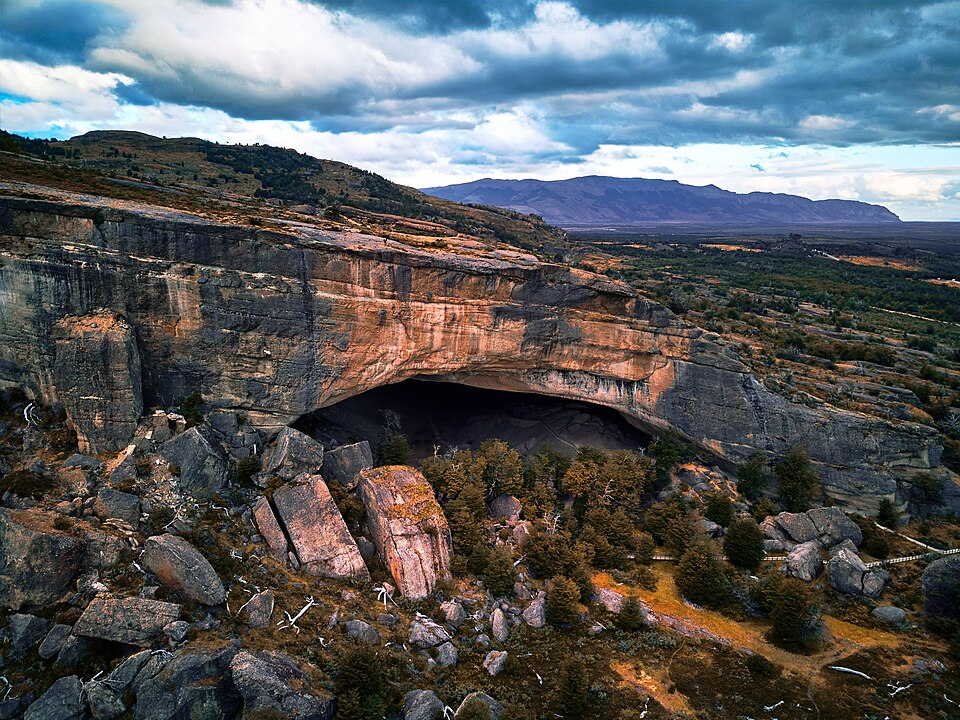
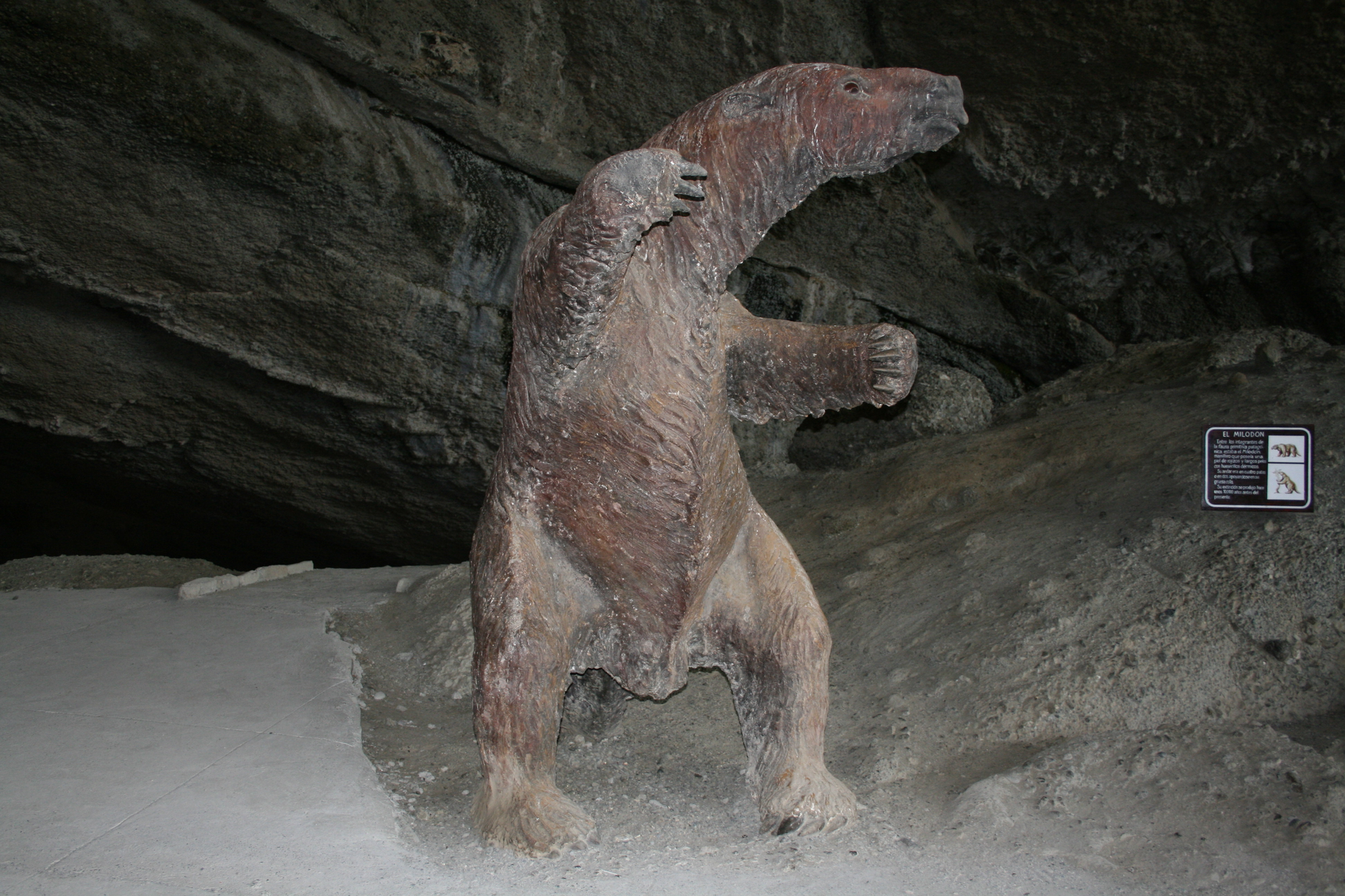
Bruce Chatwin was four years old when his grandmother showed him a glass box containing a strange piece of fur. Family lore had it that it came from a dinosaur. It was, as we would later learn, a milodon: a giant herbivorous sloth nearly four meters tall, extinct for thousands of years. In the 1890s, the German pioneer Hermann Eberhard had found intact remains in a cave near Puerto Natales. A relative of Chatwin’s who worked in Punta Arenas sent that fragment to England.
That piece of leather became a thirty-year obsession. In December 1974, Chatwin sent a telegram from London to his editor at the Sunday Times: “I am leaving for Patagonia.”
His trip lasted four months. He didn't follow a tourist's route or an explorer's path—he followed his own personal path. He started in Buenos Aires, stopped in La Plata to see a megatherium at the museum, and continued south.
In Gaiman, he interviewed descendants of the Welsh settlers from 1865. In Cholila, he found the cabin where Butch Cassidy and the Sundance Kid lived under assumed names. He then traveled down the coast: Comodoro, Sarmiento, Puerto Deseado, San Julián, Puerto Santa Cruz, Río Gallegos. He crossed into Chile via the Strait. In Punta Arenas, he visited the home of his relative Charley Milward, a neo-Gothic red-brick castle: “an iron gate painted green, with crossed Ms entwined with Pre-Raphaelite lilies.”
He went to the Milodon Cave. He found nothing that matched the fur from his childhood. He picked up a few hairs from the ground. He moved on.
He ended up in Ushuaia. From there, he walked to Estancia Harberton, where Clarita Goodall—Thomas Bridges' granddaughter—made him breakfast.
*In Patagonia* was published in 1977. It won the Hawthornden Prize and the E.M. Forster Award. Graham Greene called it “one of my favorite travel books.”
The Book That Changed Tourism
The most visible impact of *In Patagonia* was not literary but demographic. In 1981, Gaiman had two tea rooms; a few years later, there were seven, and buses full of international tourists began to arrive. The Welsh town in Chubut made it onto the English-speaking world’s map because Chatwin devoted eight pages to it.
Today, the Milodon Cave features a museum, a gift shop, a restaurant, and a life-size model. Torres del Paine is one of the world’s best-known adventure destinations. Ushuaia sells North Face gear and has Irish pubs. The English-speaking tourist who arrives with *In Patagonia* in their backpack goes exactly where Chatwin went.
The book turned Patagonia into a geographical dream destination. Before 1977, it was a distant name; afterward, it became a must-see on the international traveler’s bucket list and, for motorcyclists, almost a rite of passage.
The Difference in Perspective
Musters arrived when the Tehuelche and their hunting parties still shaped the territory. He got to know them, ate with them, learned to hunt with boleadoras, and came to understand their social hierarchies. The final heartbeats of a natural, living, and dynamic Patagonia.
Chatwin arrived when that world no longer existed. He arrived at its remnants: the cave of the extinct animal, the descendants of the settlers, the fugitive cowboys, the bust of the rancher. His Patagonia was a landscape of traces.
Both found what they were looking for. Musters documented a world that worked—and the places where the next one would work. Chatwin turned those fragments into literature and paved the way for the pursuit of “experiences,” the foundational concept of 21st-century tourism.
Explore it on a motorcycle
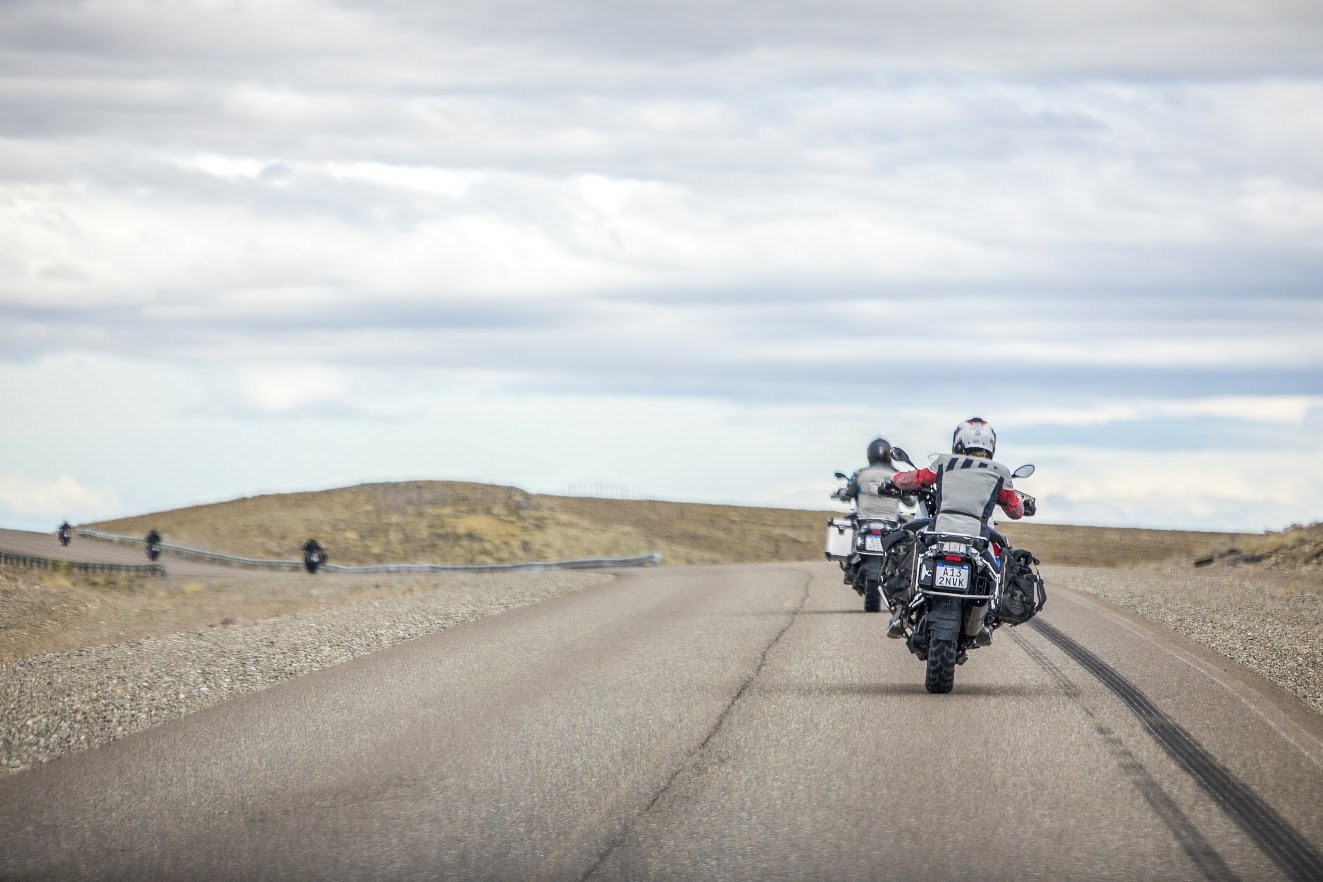
The Musters Route is the backbone of Route 40. Running from south to north, it foreshadowed the route of Argentina’s most iconic highway by a hundred years. Today, on a motorcycle, you can travel that same route in the opposite direction: from Bariloche to Puerto Santa Cruz. Endless steppe, westerly winds, and road signs every forty kilometers.
Chatwin's route offers a different experience. It has two main themes:
Coastal Route (RN3): Madryn → Gaiman → Comodoro → Deseado → San Julián → Santa Cruz → Gallegos. Patagonia—a land of ports, pioneers, and whalers. By motorcycle: crosswinds, a straight plateau, and the Atlantic Ocean that appears and disappears.
Interior and Southern Region: Esquel → Cholila → Carretera Austral → Punta Arenas → Natales → Torres del Paine.
Both paths converge in Ushuaia. And from there, if you follow Chatwin’s trail, it ends in Harberton: where Lucas Bridges was born, where Clarita Goodall made him breakfast, and where tourists arrive today—tourists who may never have read any of these books but walk on the same ground.
Possible Motorcycle Routes
In the Footsteps of Musters — From North to South on Route 40
Musters traveled from south to north, with the Tehuelche and on horseback. On a motorcycle, the natural route is the other way around: you start in the Andean valleys and head down toward the steppe, which stretches endlessly to the south.
San Martín de los Andes → Paso de Córdoba → Bariloche
The Collón Curá Valley, the river that winds through red cliffs, the gravel road that teaches you to read the terrain. Saihueque, the chief of the Manzaneros, used to live in this area. Paved road to San Martín, gravel road of varying conditions at the intersection.
Bariloche → Cholila → Esquel → Tecka → Río Senguer
As you leave the mountain range behind, the steppe gradually takes over. Cholila appears in a valley of aspen trees and lakes that looks like Wyoming—because Butch Cassidy thought so, too. Gravel in some sections, constant wind.
Senguer River → Perito Moreno → Gobernador Gregores
The plateaus of Santa Cruz are like the ocean: horizons with no points of reference, colors ranging from ochre to gray depending on the time of day. Near the Pinturas River lies the Cueva de las Manos—nine thousand years of human presence etched into the rock. You can’t pass by without stopping.
Governor Gregores → Luis Piedrabuena → Pavón Island
Piedrabuena on the Santa Cruz River: the river that Musters describes from the plateau, looking down , “winding below, turquoise between black basalt walls.” Pavón Island is where Piedrabuena held out alone for years.
Isla Pavón → Río Gallegos → Paso Monte Aymond → Punta Arenas
The pass into Chile is a plain that feels like the end of the world before the Strait comes into view. Punta Arenas is where Musters began his journey and where Menéndez’s bust still stands in the plaza, bald as a coodle.
Atlantic Coast: Carmen de Patagones → Las Grutas → Puerto Madryn → Trelew → Gaiman → Dolavon. Paved roads, long distances, the sea appearing and disappearing.
In Chatwin's Footsteps — Throughout Patagonia
Chatwin didn't have a set itinerary. He followed leads. You can do that on a motorcycle: this is the Patagonia of detours with a purpose.
Puerto Madryn → Gaiman → Comodoro Rivadavia
Gaiman is the first chapter of the book set on land: Welsh tea, brick houses, rosebushes blooming in the Chubut wind. Chatwin devoted eight pages to it. We devoted an afternoon to it.
Comodoro Rivadavia → Puerto Deseado → San Julián → Puerto Santa Cruz → Comandante Piedrabuena
The southern Atlantic coast: fishing ports, towns that look out to sea with an air of having seen it all. Puerto Santa Cruz is where Musters spent the winter and where the two roads intersect. RN3, paved road, headwind.
Piedrabuena → Río Gallegos → Ushuaia → Estancia Harberton
The end of the loop. Harberton is still Harberton: the ranch on the Beagle Channel where Clarita Goodall made breakfast for Chatwin in 1975 and which is still open to visitors today.
Ushuaia → Punta Arenas → Puerto Natales → Milodon Cave
. Cross the Strait and look for Charley Milward’s Gothic house (now the headquarters of the newspaper *El Pingüino*, still with the same green fence). The Milodon Cave has a plastic model of the animal at the entrance. Chatwin would have hated the plastic model.
Puerto Natales → Chaltén → Los Antiguos
You leave Chile via the Roballos Pass or through Cochrane, then head toward Santa Cruz, Chaltén with Mount Fitz Roy, and Los Antiguos on Lake Buenos Aires. Challenging gravel roads, breathtaking scenery.
Gobernador Costa → Río Pico → Esquel → Cholila
When you arrive in Cholila and see the sign pointing to Butch Cassidy’s cabin, you’ll understand why Chatwin went there. Because in Patagonia, even outlaws left their mark.
R40MOTO organizes guided tours on BMW Motorrad motorcycles through Argentine and Chilean Patagonia, including Route 40, the Atlantic coast, the Carretera Austral, and Tierra del Fuego. For inquiries about itineraries: r40moto.com