Series: Territories — History, Geography, and Culture of the Roads We Travel by Motorcycle
Esteban Lucas Bridges was born on December 31, 1874, in Ushuaia. He was the third white person born in that city. His father, Thomas Bridges, had arrived at the Beagle Channel as an Anglican missionary with a goal as specific as it was unlikely: to learn the language of the Yaghan. He succeeded. He mastered the language well enough to compile the first—and only—dictionary of Yaghan, containing thirty thousand entries describing the nuances of weather, water, ice, and light.
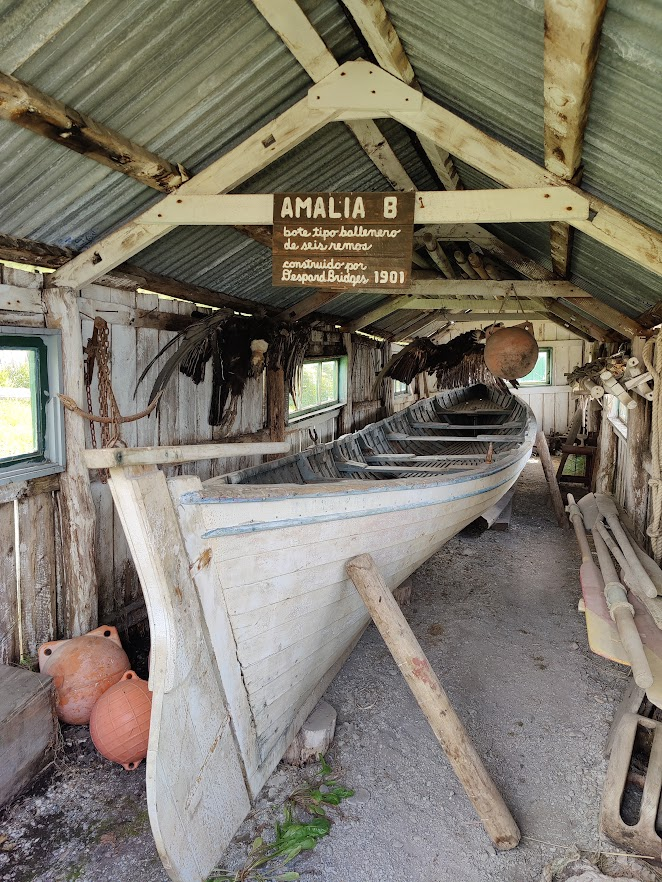
In 1886, Thomas founded the Harberton Ranch on the Beagle Channel, eighty kilometers east of Ushuaia. He named it after the town of Devon, where his wife had grown up. It is the oldest ranch in Argentine Tierra del Fuego and remains in the family’s possession. The Bridges family would also build the Viamonte Ranch on the Atlantic coast of Tierra del Fuego. They were not mere observers of colonization—they were part of it.
Lucas grew up on that edge of the world where his closest neighbors were the Yaghan and the Selknam. He learned all three languages at the same time. He knew these people from the inside out, with the intimacy that only a shared childhood can provide.
Blood brother of the Selknam
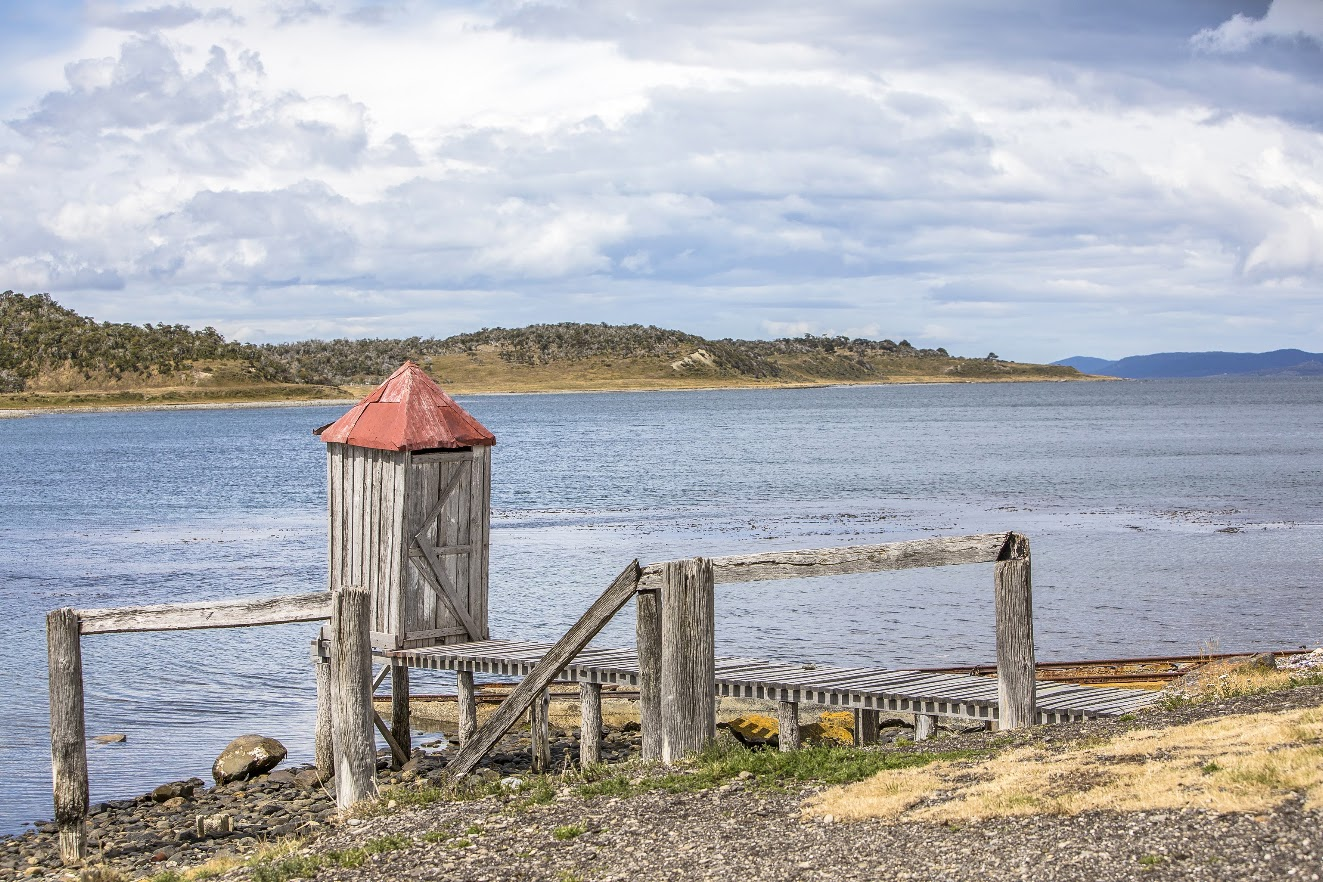
As an adult, Lucas ventured into Selknam territory—a people of nomadic hunters who inhabited the wooded steppe in the island’s interior. He was the only European to be accepted as a blood brother. He witnessed the Hain, the initiation ceremony that no outsider had ever seen before.
Forty years later, he poured all of that into *The Last Frontier of the Earth*, published in 1948. Bridges did not write as an anthropologist but as someone who had been there: the proper names, the joke from the day before, how to set a guanaco trap, how a ceremony smelled. The richness of the concrete details.
By the time the book was published, the Selknam had all but disappeared. All that remained was what Bridges had written. It remains the most comprehensive source on that culture and on life in the far south.
The Baker's Master
In the 1920s, Bridges arrived in the Chacabuco Valley, in Aysén, to manage the Río Baker Ranch. He spent 28 years there. At its peak, the ranch raised 85,000 sheep on more than 200,000 hectares.
He built roads, erected bridges over the rivers in the area, and built the school that served as the first nucleus of what eventually became Cochrane. In Chilean Patagonia, they called him “El señor del Baker.”
The contradiction is there, without needing to be emphasized: the man who best documented Selknam culture spent his final productive decades building the cattle ranch that accelerated the transformation of the very same kind of territory he had known as a living world.
He died on April 4, 1949, in Buenos Aires.
The Reverse Turn
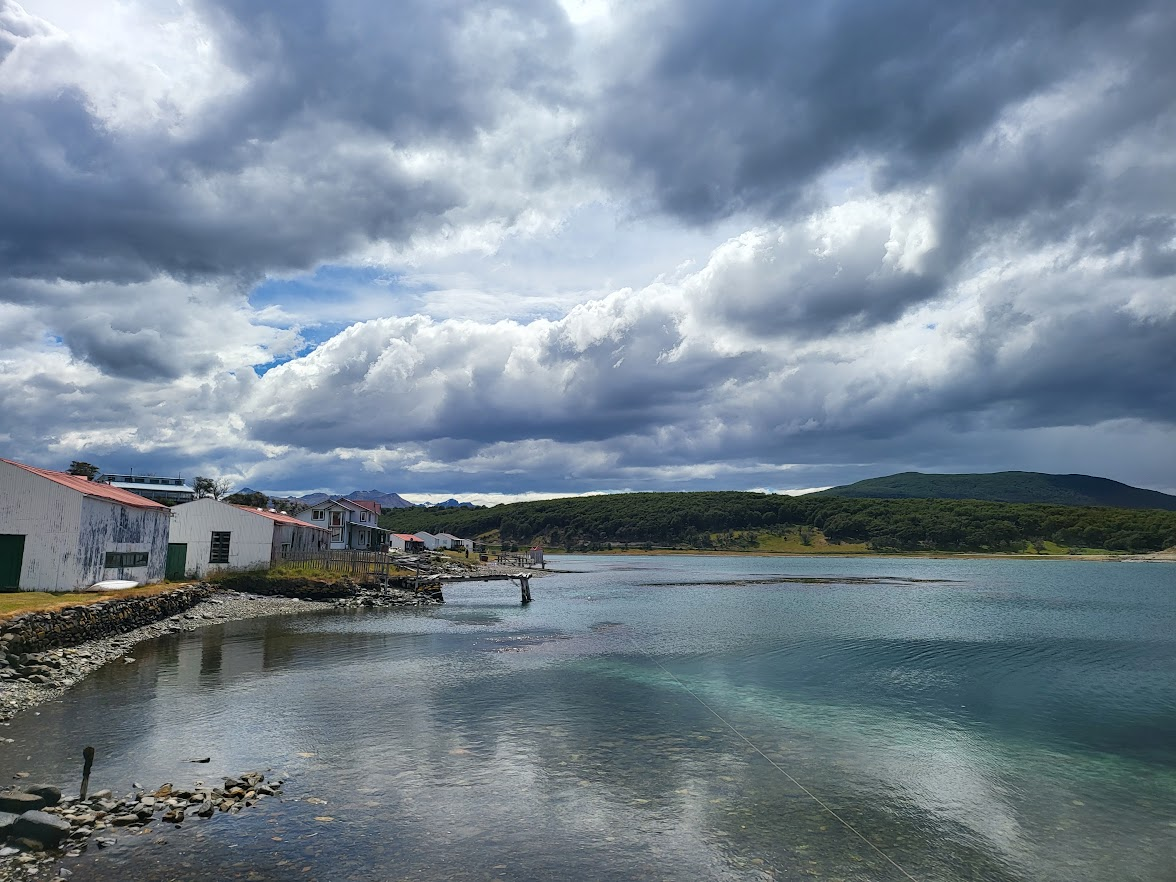
The ranch continued to operate under various owners. In 1964, it was divided into plots as part of the agrarian reform. In 1980, it was sold to a private owner. The steppe remained degraded.
In 1995, Douglas Tompkins—founder of The North Face and Esprit, who had become a full-time conservationist—visited the Chacabuco Valley for the first time. In 2004, his organization, Conservación Patagónica, purchased the 70,000 hectares. What followed was a systematic effort: they removed more than 25,000 sheep and 3,000 head of cattle, tore down more than 600 kilometers of fencing with the help of volunteers from around the world, and established a monitoring program focused on the huemul—the critically endangered Andean deer—and the puma.
Tompkins died in December 2015 when his kayak capsized on Lake General Carrera. He was 72 years old. Three years later, Kristine McDivitt Tompkins donated more than 80,000 hectares to the Chilean government. The Chacabuco Valley, together with the Tamango and Jeinimeni reserves, became Chile’s Patagonia National Park —more than 300,000 hectares in the Aysén Region.
In February 2020, Kristine inaugurated the Lucas Bridges House Museum in the center of the park. The house where Bridges lived during his years at Baker was restored and converted into a museum space. He was not erased from the place but rather honored there—in all his complexity.
The corridor that connects two worlds
Chile's Patagonia National Park should not be confused with Argentina's Patagonia National Park, even though they are practically next door to each other and Tompkins was instrumental in the creation of both. The Chilean park is located in Aysén. The Argentine park is located in Santa Cruz, on the other side of the mountain range, near Bajo Caracoles and Perito Moreno.
What’s remarkable from a motorcyclist’s perspective is that they’re all connected by the same corridor: the road that runs through the Chacabuco Valley links the Carretera Austral (Route 7) with the Roballos Pass, which crosses into Argentina and descends toward Bajo Caracoles on Route 40. Nearby are the Argentine park, the Santa Cruz steppe, and, just a few kilometers away, the Pinturas River canyon, home to the Cueva de las Manos—9,000-year-old cave paintings that represent the oldest record of human presence in Patagonia.
The same path. Different layers of time.
Explore it
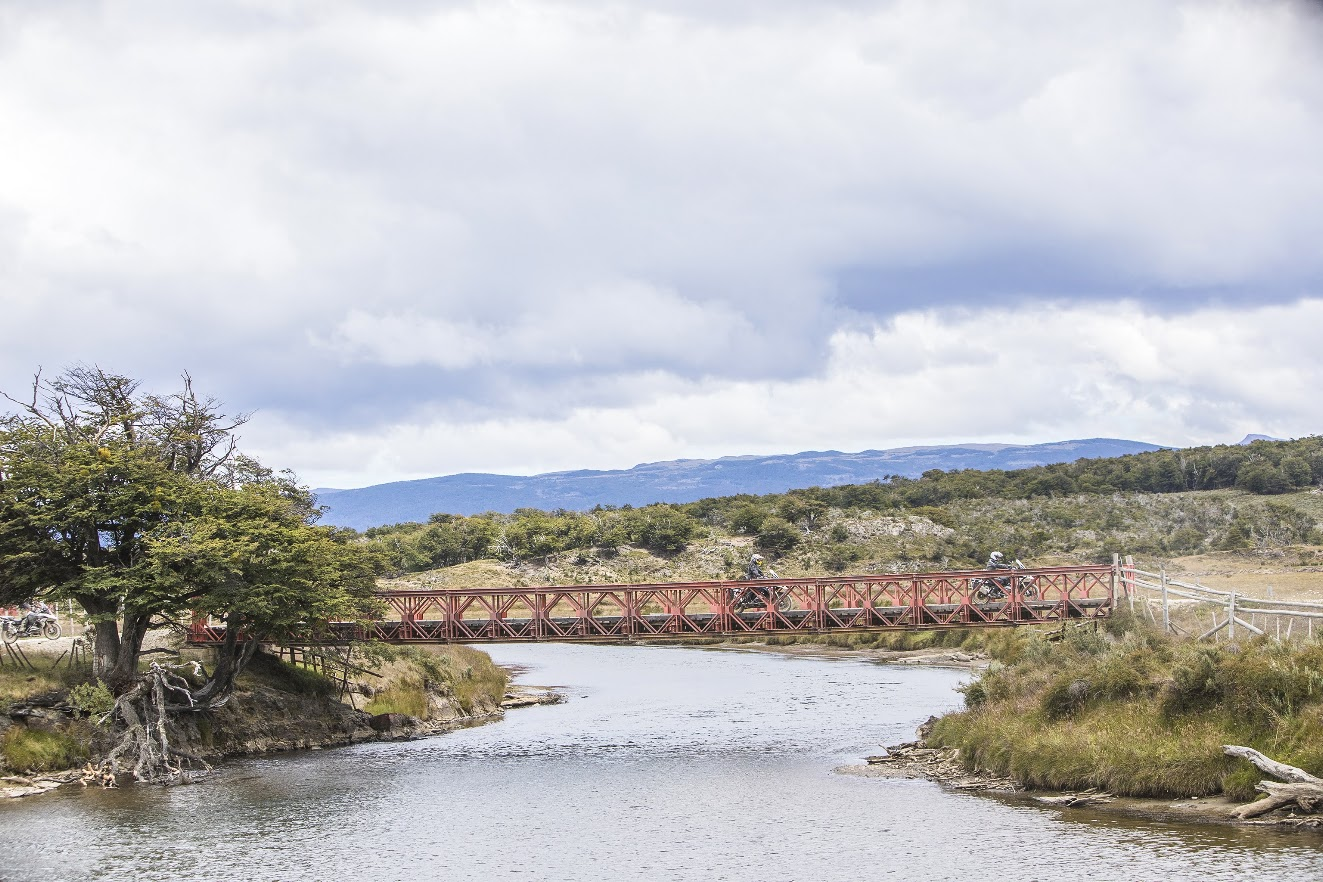
Route 7 in the Baker area is one of the most challenging stretches of the Carretera Austral: loose gravel, sharp curves over the river, views of the Baker River flowing turquoise between walls of black basalt. The stretch through the Chacabuco Valley toward Paso Roballos is gentler but more desolate: open steppe, vast skies, and wildlife returning. Guanacos where once there were only sheep. Condors. Pumas that no one scares away anymore.
Once you cross the border, Routes 41 and 39 head down toward Lago Posadas and Bajo Caracoles. From there, Route 40 stretches southward along one of its most arid and open stretches: kilometers of the Santa Cruz steppe with nothing on the horizon except the wind and the road signs. A few days’ drive later, that same road leads to the end of Route 3 in Ushuaia.
In other words: the route that winds through the park where Lucas Bridges built his ranch can end—if you have the time and inclination—at the bay where he was born. In Harberton, the family ranch that he opened to tourists, you can visit a penguin colony and the small museum dedicated to the family that inspired this story. The world comes right to its very shores.
R40MOTO organizes guided BMW Motorrad tours through Argentine and Chilean Patagonia, including the Carretera Austral, Patagonia National Park, and Route 40. For inquiries about itineraries: r40moto.com